How to Choose Steel Wire for Welded Mesh Production?
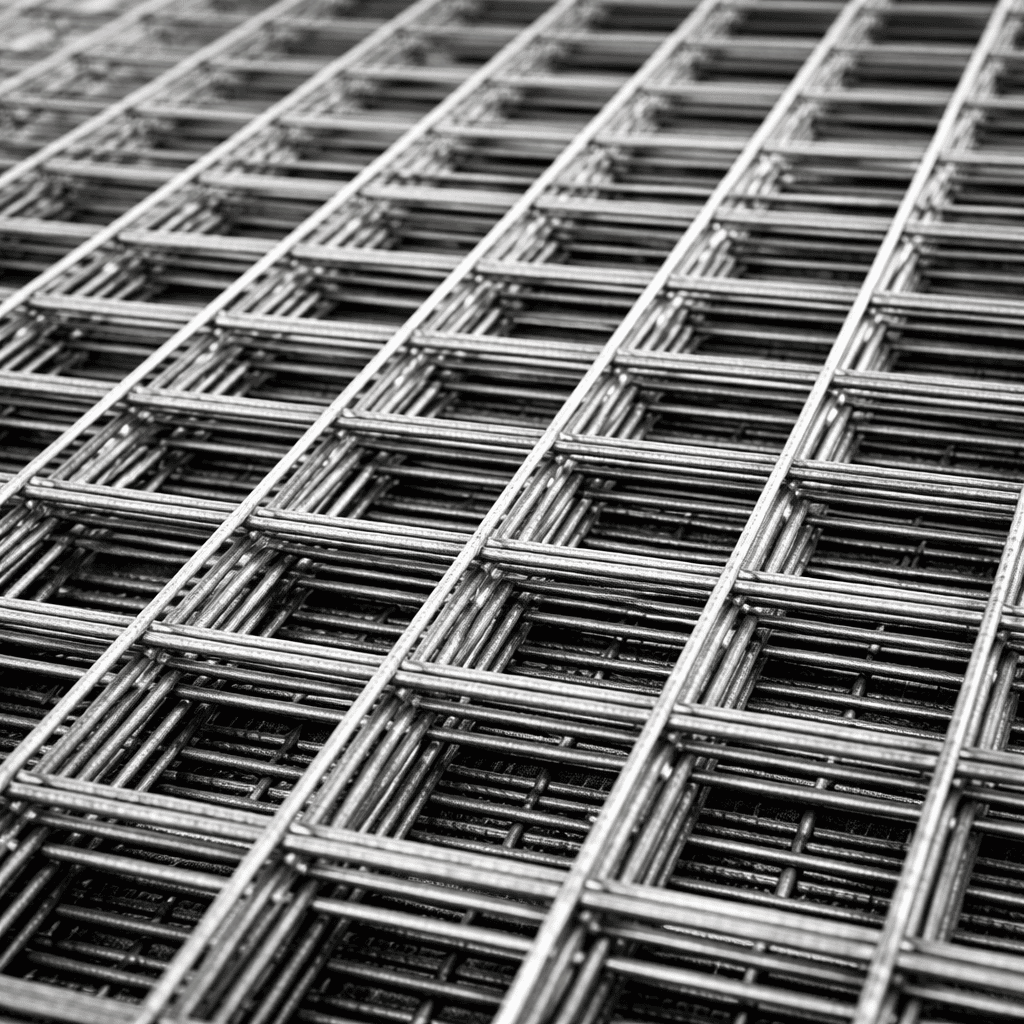
Steel wire for welded mesh production can look acceptable on a quotation sheet but fail on the welding line. A low price may become expensive when weld spots break, feeding becomes unstable, or rust appears after shipping. I choose wire by asking one question first: will it run stably in real production?
To choose steel wire for welded mesh production, focus on weldability, diameter tolerance, tensile-yield balance, elongation, surface condition, coil winding, and batch consistency. Do not choose only by the lowest price or highest strength. The right wire should match your welding equipment, mesh design, production speed, and quality requirements.
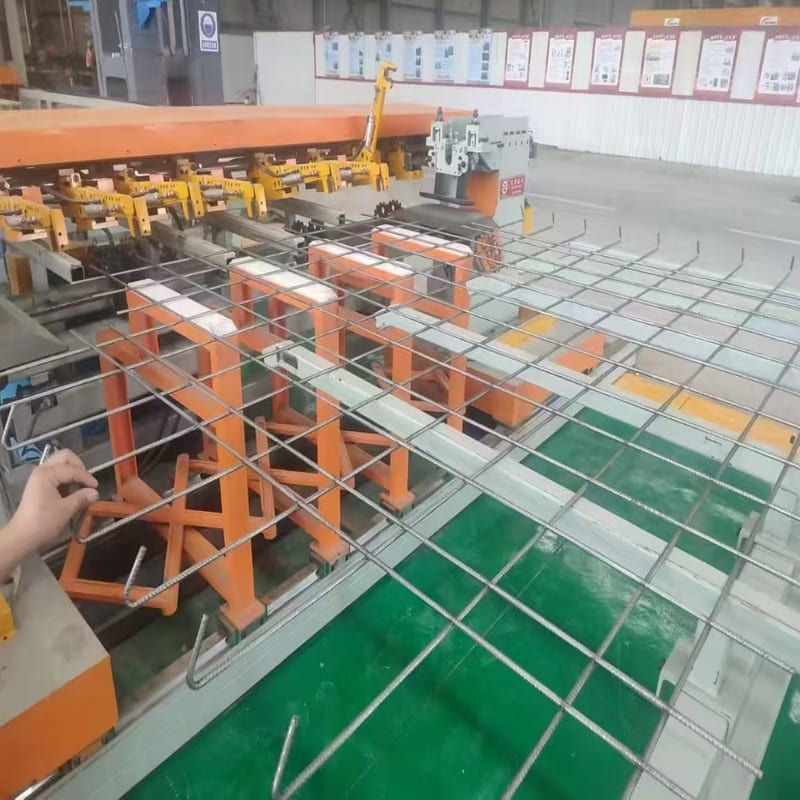
Many buyers first ask me for price per ton. I understand that. But from factory experience, the better first discussion is about the welding machine, wire diameter, mesh opening, target strength, and past production problems.
What Specifications Matter Most for Steel Wire for Welded Mesh Production?
Choosing steel wire for welded mesh production becomes risky when specifications are treated as simple numbers. Diameter, tensile strength, and elongation are not only purchase terms. They directly affect welding stability, machine adjustment, and final mesh quality.
The most important specifications are diameter tolerance, tensile strength, yield strength, elongation, surface condition, and coil condition. For automated welded mesh lines, these factors must stay consistent from coil to coil and batch to batch. Stable wire reduces weld failure, feeding resistance, and repeated machine adjustment.
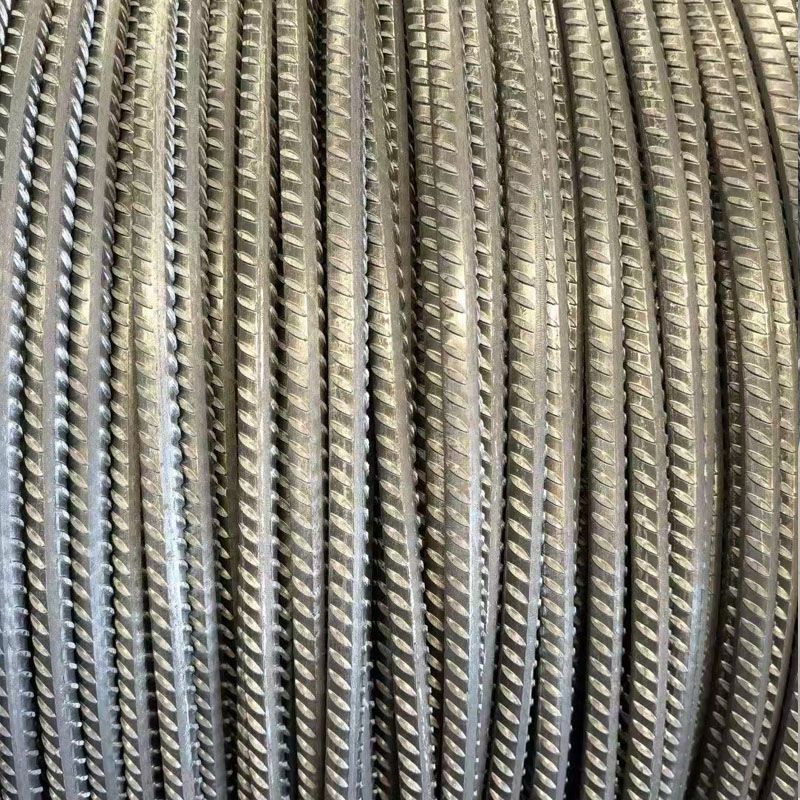
Diameter tolerance is a production variable
In welded mesh production, wire diameter affects electrical resistance, weld nugget formation, feeding smoothness, and final mesh weight1. If the diameter changes too much, the same machine setting may produce different weld results.2
I often see this problem when buyers only write “5.0 mm wire” on the inquiry. A better inquiry includes:
- Nominal diameter
- Allowed tolerance
- Coil weight
- Mesh opening
- Welding line speed
- Required tensile range
- Applicable standard, if any
> Buyers should verify ASTM, EN, JIS, GB, or local project requirements according to their own market and end-use application.
Strength must be balanced with weldability
Higher tensile strength is not automatically better.3 Very hard wire may create feeding resistance, unstable welding, and more frequent adjustment.4 For resistance welding, I usually check the relationship between:
| Factor | Production risk if ignored |
|---|---|
| Tensile strength | Wire may be too hard or too soft |
| Yield strength | Mesh may not meet performance needs |
| Elongation | Low ductility may cause breakage |
| Hardness | High hardness may reduce feeding stability |
| Weldability | Poor weld spots may increase rejection |
The best steel wire for welded mesh production is not the strongest wire. It is the wire that meets strength requirements while still welding smoothly.
How Does Surface and Delivery Condition Affect Steel Wire for Welded Mesh Production?
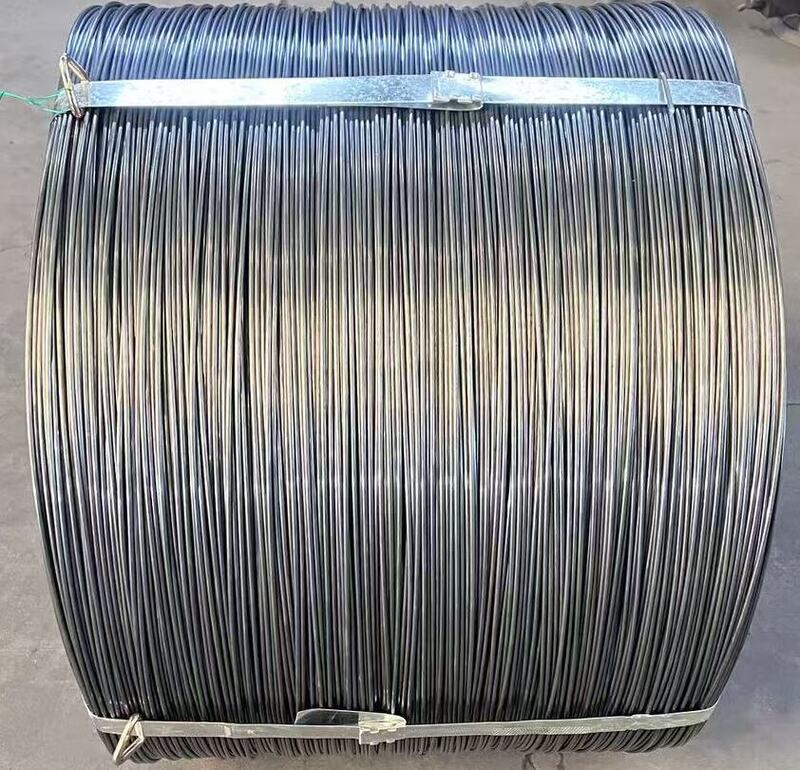
Steel wire for welded mesh production can pass mechanical testing but still create trouble if the surface or delivery condition is poor.5 Rust, oil contamination, bad winding, and weak packaging can all affect usable inventory after ocean shipping.
Surface condition affects electrical contact, welding consistency, and feeding performance.6 Clean, suitable, evenly finished wire normally runs better than rusty, oily, or poorly wound coils. For export orders, anti-rust packaging and coil pay-off quality are also part of weldability risk control.
Rust is not only a cosmetic issue7
Some buyers treat light rust as a small problem. In production, rust can become a real cost. It may affect contact resistance, stain finished mesh, increase cleaning work, and reduce customer confidence.8
For long-distance sea freight, I pay close attention to:9
- Moisture protection
- Inner wrapping
- Outer woven or waterproof packaging
- Pallet or coil stability
- Container loading condition
- Storage time before shipment
Coil winding affects line downtime
Poor winding causes tangled pay-off, sudden wire pulling, and feeding interruption.10 These problems are frustrating because the wire may look fine before production starts.
A professional supplier should control:
- Coil shape for stable stacking and handling
- Layering condition for smooth pay-off
- Coil weight according to the buyer’s line capacity
- Surface cleanliness before packing
- Batch marking for traceability
In my experience, many welding complaints are not caused by one dramatic defect. They come from small variations repeated across many coils. That is why I prefer to discuss production conditions before confirming a specification.
Frequently Asked Questions
Is higher tensile strength better for welded mesh wire?
No. Higher tensile strength is not always better. Welded mesh wire must balance strength, elongation, hardness, and weldability. If the wire is too hard, it may feed poorly, weld unstably, and require more machine adjustment.
What should I include in an inquiry for welded mesh wire?
I suggest including diameter, tolerance, tensile range, yield requirement, elongation, coil weight, mesh opening, welding machine type, production speed, surface requirement, packaging method, and target standard. This helps the supplier recommend practical steel wire for welded mesh production.
Can rusty wire still be used for welded mesh?
Sometimes light rust can be processed, but it increases production risk. Rust may affect welding stability, surface appearance, and usable inventory. For export supply, I always recommend strong anti-rust packaging and clear storage control.
Why does batch consistency matter?
Batch consistency reduces repeated machine adjustment.11 If mechanical properties or diameter vary between coils, weld spots may become unstable.12 Consistent batches help welded mesh factories improve efficiency and reduce rejection.
Conclusion
Choosing steel wire for welded mesh production is a production-risk decision, not only a price decision. I recommend checking weldability, diameter tolerance, strength balance, elongation, surface condition, coil winding, packaging, and batch consistency before placing an order. If you need weldable cold drawn steel wire for mesh production, share your machine details, wire size, mesh design, and quality target with YaDa Industry for a practical factory-side recommendation.
"Critical sheet thickness for weld nugget growth during ...", https://www.academia.edu/24912832/Critical_sheet_thickness_for_weld_nugget_growth_during_resistance_spot_welding_of_three_steel_sheets. A welding-process reference explains that resistance-weld heat generation depends on current, time, and electrical resistance at the joint, so changes in wire cross-section can alter heat input and weld-nugget formation; this supports the mechanism, although it may discuss resistance welding generally rather than welded-mesh lines specifically. Evidence role: mechanism; source type: research. Supports: A neutral welding source should explain how conductor dimensions and welding parameters affect electrical resistance, heat generation, and weld nugget formation in resistance welding.. Scope note: Contextual support from resistance-welding principles rather than a direct test of welded mesh wire. ↩
"Resistance Welding Quality Through Artificial Intelligence Techniques", https://pmc.ncbi.nlm.nih.gov/articles/PMC11945042/. Studies of resistance welding report that weld quality is sensitive to workpiece geometry, electrical resistance, and contact conditions under a given current-time-force schedule; this supports the statement that diameter variation can change weld results, with the limitation that most studies address sheet or general resistance welding rather than welded mesh production alone. Evidence role: mechanism; source type: paper. Supports: A peer-reviewed or technical source should support that variations in workpiece size or contact conditions can change heat generation and weld quality when welding parameters are fixed.. Scope note: Evidence may be extrapolated from general resistance-welding research. ↩
"(PDF) STRUCTURAL WELDED WIRE REINFORCEMENT", https://www.academia.edu/36574547/STRUCTURAL_WELDED_WIRE_REINFORCEMENT. Materials-science references commonly describe steel selection as a balance among strength, ductility, toughness, and processability; this supports the claim that maximum tensile strength alone is not a sufficient selection criterion, although it does not by itself define the optimum wire grade for a specific mesh machine. Evidence role: expert_consensus; source type: education. Supports: A university or materials-science source should explain the trade-off between strength, ductility, and processing behavior in steels.. Scope note: General materials-selection support, not a machine-specific validation. ↩
"Cold drawn steel wires—processing, residual stresses and ductility—part I", https://www.academia.edu/611393/Cold_drawn_steel_wires_processing_residual_stresses_and_ductility_part_I_metallography_and_finite_element_analyses. Technical literature on cold-drawn steel wire indicates that increased work hardening raises strength and hardness while reducing ductility, which can affect handling and subsequent joining operations; this supports the production-risk claim, though feeding resistance on a particular line remains equipment-dependent. Evidence role: general_support; source type: research. Supports: A technical or research source should show that high hardness and low ductility can impair forming, handling, or weldability of steel wire.. Scope note: Contextual support; actual feeding stability depends on machine design and coil condition. ↩
"Resistance Seam Welding", https://www.osti.gov/servlets/purl/5568130. Wire-product specifications and technical guidance typically include requirements for mechanical properties as well as surface condition, workmanship, and delivery form, supporting the point that passing mechanical tests alone may not ensure production suitability; the support is contextual unless the source specifically addresses welded mesh line failures. Evidence role: general_support; source type: institution. Supports: A standards body or technical institution should support that surface condition and workmanship requirements are part of wire quality in addition to mechanical properties.. Scope note: Contextual support from wire quality requirements. ↩
"Resistance Welding Quality Through Artificial Intelligence Techniques", https://pmc.ncbi.nlm.nih.gov/articles/PMC11945042/. Research on resistance welding shows that surface oxides, contamination, and contact condition influence electrical contact resistance and heat generation at the joint, supporting the claim that surface condition affects welding consistency; feeding performance is related but may require separate production-handling evidence. Evidence role: mechanism; source type: paper. Supports: A paper should explain how oxides, oils, or surface roughness affect contact resistance and weld quality in resistance welding.. Scope note: Direct support is strongest for electrical contact and weld consistency, weaker for feeding behavior. ↩
"Resistance Spot Weld Ability of Mild Steel Coated with Zn ...", https://epstem.net/index.php/epstem/article/download/379/379. Corrosion and welding references describe rust as an iron-oxide corrosion product that changes the steel surface and can interfere with electrical contact or surface quality, supporting the statement that rust is not merely cosmetic; the source may not quantify the production cost for welded mesh specifically. Evidence role: general_support; source type: research. Supports: A neutral source should support that rust changes the steel surface and can affect electrical or joining behavior.. Scope note: Contextual support; production severity depends on rust extent and process settings. ↩
"Analytical Investigation of Iron-Based Stains on Carbonate ...", https://pmc.ncbi.nlm.nih.gov/articles/PMC9960802/. Studies of electrical contacts and steel surface oxides indicate that oxide or corrosion layers can increase or destabilize contact resistance, while corrosion references describe rust staining as a visible surface-quality issue; this supports the technical portions of the claim, although customer confidence and cleaning labor are commercial consequences not directly proven by such sources. Evidence role: mechanism; source type: paper. Supports: A source should support that rust or oxide films change electrical contact behavior and can degrade surface appearance.. Scope note: Direct support covers contact resistance and visible staining, not buyer psychology. ↩
"What's the best way to protect bare steel parts during sea freight?", https://www.zerust.com/faq/whats-the-best-way-to-protect-bare-steel-parts-during-sea-freight/. Maritime cargo guidance identifies moisture, condensation, and inadequate packaging as corrosion risks for steel products during sea transport, supporting the need to control wrapping, loading condition, and storage time for exported wire; the evidence is general to steel cargo rather than welded-mesh wire alone. Evidence role: general_support; source type: institution. Supports: A logistics, insurance, or maritime institution should support that ocean transport can expose steel cargo to moisture, condensation, and corrosion risks mitigated by packaging and storage controls.. Scope note: General sea-freight corrosion guidance. ↩
"Pay-Offs – RMG", https://rmgwire.com/product-category/payoffs/. Wire-handling guidance describes coil winding, layering, and payoff behavior as factors that influence tangling, tension changes, and continuous feeding, supporting the statement that poor winding can interrupt production; the degree of downtime remains dependent on the specific payoff equipment. Evidence role: general_support; source type: institution. Supports: A wire industry or manufacturing reference should support that coil winding and payoff quality affect feeding continuity in automated wire processing.. Scope note: Contextual operational support rather than a quantified downtime study. ↩
"Quality Control in Manufacturing: Overview and Best Practices", https://www.6sigma.us/manufacturing/quality-control-in-manufacturing/. Quality-control literature on statistical process control treats variation in process inputs as a cause of instability and corrective adjustment, supporting the claim that consistent batches can reduce repeated machine setting changes; the source provides general manufacturing support rather than welded-mesh-specific data. Evidence role: expert_consensus; source type: education. Supports: A quality-control or manufacturing source should support that lower input variation reduces process adjustments and improves process stability.. Scope note: General process-control support. ↩
"Fundamentals of Small Parts Resistance Welding", https://amadaweldtech.com/wp-content/uploads/2023/04/Resistance-Welding-Fundamentals.pdf. Resistance-welding research shows that weld-spot quality depends on material geometry, contact resistance, and process parameters, so coil-to-coil variation in wire diameter or related material properties can plausibly destabilize weld results; the support is mechanistic and may not provide a direct welded-mesh factory case study. Evidence role: mechanism; source type: paper. Supports: A source should support that resistance weld quality depends on material dimensions, electrical resistance, and mechanical properties, so variation can affect weld stability.. Scope note: Mechanistic support rather than direct production data. ↩