Why Does Harder Cold Drawn Steel Wire Break During Welding?
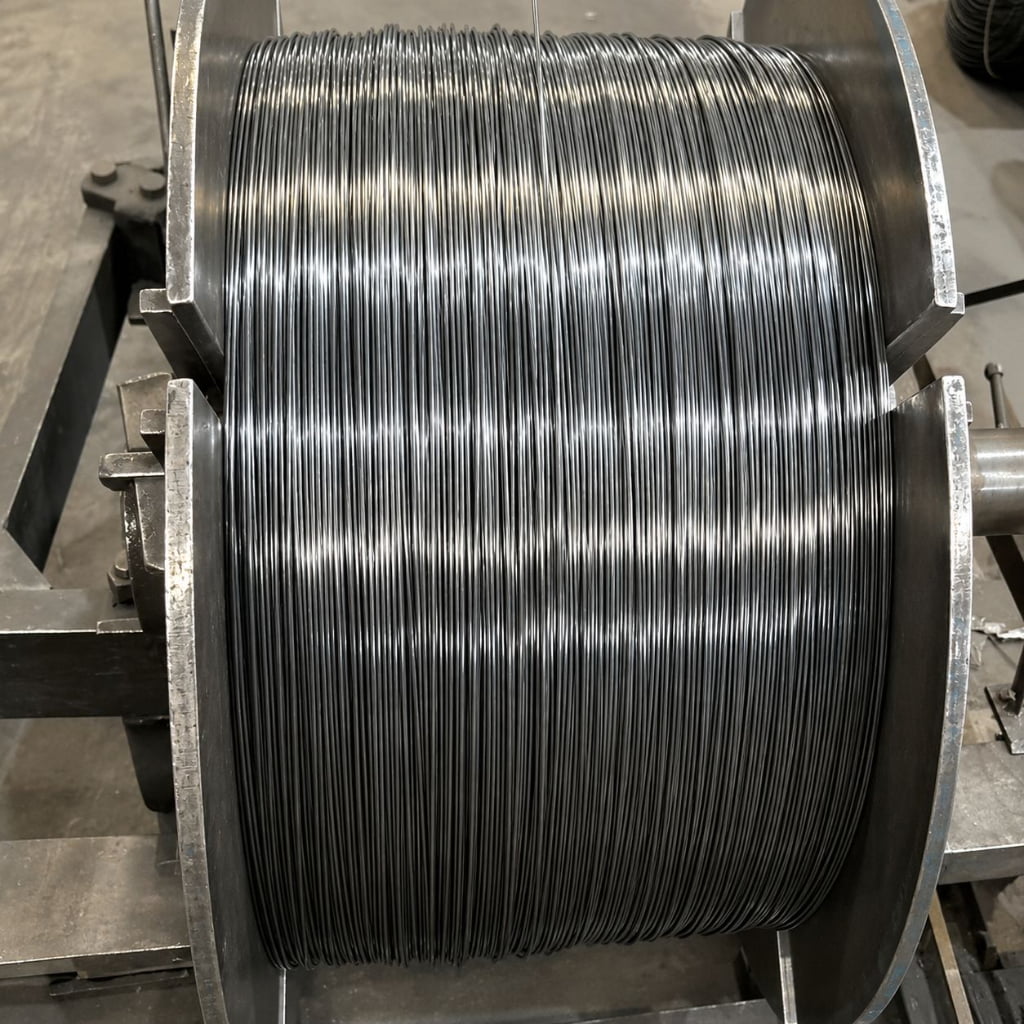
When wire breaks during welding, the first reaction is often to blame the material. But in many cases, the real problem is not that the wire is bad — it is that the wire does not match the equipment.
Cold drawn steel wire can break during welding when tensile strength is too high relative to the wire's elongation, surface condition, or the welding window of the equipment being used.1 A harder wire is not always a better wire for welded mesh or steel deck production lines.
Wire breakage during welding is one of the most common complaints I hear from customers running welded mesh lines or truss deck production. It slows down production, damages electrodes, and makes it hard to trust the next batch of material. The frustrating part is that this problem is almost never caused by one thing alone. This post will walk through how cold drawing affects wire behavior, why harder does not always mean better for welding applications, and what questions you should ask before buying your next batch of weldable cold drawn wire.
Why Is Harder Cold Drawn Steel Wire Not Always Better for Welding?
Many buyers assume that higher tensile strength means better quality wire. But when the wire has to run through a feeding system, bend around guides, and then survive a resistance weld, that assumption can cause real problems.
The cold drawing process raises tensile strength but also reduces elongation.2 For welding applications, both values matter. A wire with very high strength but very low elongation may be brittle enough to crack under feeding stress or fail at the heat-affected zone right after welding.
What Cold Drawing Actually Does to the Wire
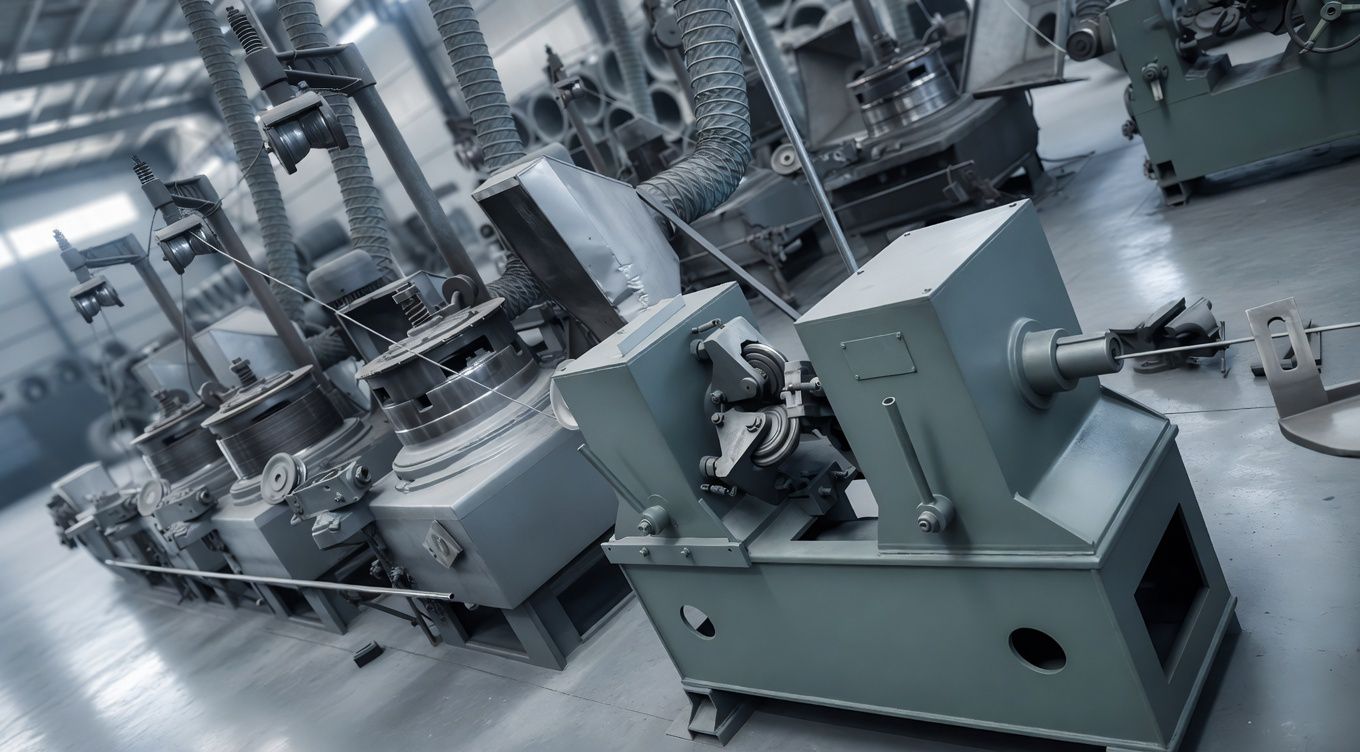
Cold drawing pulls the wire through a die under tension. Each pass through the die changes the wire's internal structure.3 The result is a harder, stronger wire — but also one that has less room to stretch before it breaks.
The trade-off looks like this:
| Drawing Condition | Tensile Strength | Elongation | Weldability Risk |
|---|---|---|---|
| Lightly drawn | Lower | Higher | Low — wire is forgiving |
| Moderately drawn | Medium | Medium | Moderate — usually suitable for welding |
| Heavily drawn | High | Low | Higher — brittle behavior under welding stress |
For customers making welded mesh or truss deck panels, the goal is not the highest possible tensile strength. The goal is a wire that is strong enough for the product specification and still ductile enough to survive the full production process — feeding, straightening, welding, and cutting.
The Feeding and Bending Problem
Before the wire even reaches the welding point, it has already been stressed. It is pulled off the coil, passed through straightening rollers, and fed into the welding head under tension. If the wire's elongation is too low, this process alone can introduce micro-cracks or build up enough stress that the wire breaks at the weld.4
I have spoken with customers who switched to a higher-strength wire to improve their product's load performance, only to find that their older feeding equipment could not handle it. The wire was not defective. It was simply specified for a different kind of production line — one with more precise tension control and newer guide components.
The Welding Heat Window
Resistance welding generates heat at the contact point between the wire and the electrode.5 That heat has to be controlled within a window — enough to fuse the joint, but not so much that it damages the surrounding wire.6
Harder wire often has a narrower welding window.7 If the welding current is slightly too high, the heat-affected zone next to the weld becomes more brittle than the base wire.8 If the current is slightly too low, the joint is weak and will fail under load.9 On older welding machines with less precise current control, this narrow window creates a real production problem.
A softer, more ductile wire is generally more forgiving across a wider range of welding settings. This does not mean it is a better wire in every way — it means it is a better fit for certain equipment and certain production rhythms.
How Do You Find the Right Balance Between Strength and Weldability?
There is no single answer that works for every customer. The right balance depends on the customer's product spec, their equipment condition, their production speed, and their quality requirements. But there are some practical steps that help narrow it down.
The right wire specification for welding is found by matching tensile strength and elongation to the equipment's welding window, not by choosing the highest strength available. Sample testing on the actual production line is the most reliable way to confirm this match before placing a bulk order.
Start With the Right Questions
When a customer tells me their wire is breaking during welding, I always start with a set of basic questions before drawing any conclusions about the material:
1. Where is the wire breaking?
The location of the break tells you a lot about the cause.
| Break Location | Most Likely Cause |
|---|---|
| At the weld point | Welding current too high, wire elongation too low, or surface contamination |
| During feeding | Feeding tension too high, guide wear, or wire too stiff for the feeding system |
| During bending/forming | Wire elongation too low for the bend radius |
| Random locations | Inconsistent batch quality or coil packaging damage |
2. What are the wire's actual mechanical values?
Do you have the test report from the batch that broke? What is the tensile strength and elongation for that specific diameter and heat? Comparing these values against what your equipment can handle is the first real diagnostic step.
3. What is the condition of the welding machine?
An older machine with worn electrodes, inconsistent current output, or unstable clamping pressure will struggle with harder wire even if the wire itself is within spec.10 In many production cases I have seen, the equipment was the limiting factor — not the material.
4. Is the surface condition clean and consistent?
Wire with heavy scale, oil residue, or rust can cause poor electrode contact.11 This changes the effective heat distribution at the weld and can cause local overheating or weak joints, even when the wire's mechanical properties are correct.
An Example of Finding the Right Balance
I worked with a customer who was producing welded mesh panels on older resistance welding equipment. They started with a lower-carbon wire condition and found it too soft — the panels did not meet their strength requirements. They switched to a harder wire from a different supplier and found the breakage rate went up significantly, especially during the feeding and at the weld point.
The solution was not to go back to the softer wire or keep pushing with the harder option. We adjusted the cold drawing process for their specific diameter and diameter-to-strength ratio — producing a wire that met their tensile strength requirement but kept elongation in a range that the older equipment could handle. After sample testing on their actual line, the breakage rate dropped to an acceptable level.
This case is not unusual. It shows that the right wire is not always the strongest wire available, and it is not always the softest wire either. It is the wire that fits the full production context.
What to Specify When You Order Weldable Cold Drawn Steel Wire
If you are a welded mesh manufacturer or a steel deck producer, here is a practical checklist for specifying wire that is more likely to run stably on your line:
| Specification Item | Why It Matters |
|---|---|
| [Diameter tolerance | Affects electrode contact and feeding consistency](https://eagar.mit.edu/publications/Eagar076.pdf)%%%FOOTNOTE_REF_12%%% |
| Tensile strength range (min and max) | Sets the welding window; a max value matters as much as a min |
| Elongation minimum | Ensures enough ductility for feeding and welding |
| Surface condition | Clean, scale-free surface improves weld quality |
| Coil weight and inner diameter | Must match your decoiler and feeding system |
| Batch consistency requirement | Reduces variation between coils in the same order |
Setting a maximum tensile strength — not just a minimum — is something many buyers overlook. If your welding equipment is calibrated for a certain strength range, wire that exceeds that range by a significant margin can cause as many problems as wire that falls below it.
When to Ask for Samples First
For any new wire supplier, new diameter, or new specification, sample testing on your own production line is the only way to be certain before committing to a full order. Mill test reports and certificates tell you what was measured in a controlled condition. Your production line tells you what actually happens under real operating conditions.
At our factory, we always recommend sample orders for new customers or for customers changing their specification significantly. The cost of a failed batch is almost always higher than the cost of a sample test.
Conclusion
Harder cold drawn steel wire breaks during welding because weldability depends on the full picture — tensile strength, elongation, surface condition, feeding system, and equipment window — not strength alone. Matching the wire to your production line is what matters most.
"Effect of cold drawing on mechanical properties of welded steel tubing", https://www.ideals.illinois.edu/items/5123. A peer-reviewed welding or materials-engineering source should be cited to show that wire weldability is governed by both material properties, such as strength, ductility, and surface condition, and resistance-welding parameters, such as current, force, and time. Evidence role: mechanism; source type: paper. Supports: A technical source should support that cold work changes strength and ductility, and that resistance-welding quality depends on material condition and process parameters.. Scope note: The source may support the mechanism generally rather than documenting the exact production-line failure mode described in the article. ↩
"[PDF] Effects of Cold-work on the Mechanical Properties of TP304 ...", https://repository.lib.ncsu.edu/bitstreams/aa62599e-f931-456f-ad52-8d2378912f28/download. Materials-science references describe cold working as a process that increases dislocation density, raising tensile strength while reducing ductility and elongation in metals. Evidence role: mechanism; source type: education. Supports: A university materials-science source should explain that cold working increases strength and decreases ductility or elongation.. ↩
"[PDF] Effects of microstructure and crystallography on mechanical ...", https://dr.lib.iastate.edu/server/api/core/bitstreams/bbef1aa6-e108-496b-9ea5-996b9e720db9/content. Metallurgical studies of cold-drawn steel wire report that plastic deformation during drawing changes internal structure, including dislocation density, crystallographic texture, and grain morphology. Evidence role: mechanism; source type: paper. Supports: A metallurgical paper should support that drawing deformation changes dislocation density, grain morphology, texture, or other microstructural features of steel wire.. ↩
"Wire Drawing Research Papers - Academia.edu", https://www.academia.edu/Documents/in/Wire_Drawing/TopPapers. Research on cold-worked steel wire indicates that reduced elongation and ductility decrease the material's tolerance for bending and tensile deformation, increasing the likelihood of crack initiation under applied stress. Evidence role: mechanism; source type: paper. Supports: A paper should support that reduced ductility or elongation lowers tolerance to bending and tensile stresses and can promote cracking or fracture.. Scope note: The source may address bending or forming failure generally rather than wire breakage at a specific welding station. ↩
"[PDF] Resistance Welding - MIT", https://eagar.mit.edu/publications/Eagar126.pdf. Reference descriptions of resistance welding explain that heat is produced by electrical resistance as current passes through the workpieces and contact interfaces under electrode force. Evidence role: definition; source type: encyclopedia. Supports: A reference source should define resistance welding as heat generation by electrical resistance at the workpiece and contact interfaces.. ↩
"Resistance Spot Welding-Weldability Lobe Simulation Development ...", https://www.academia.edu/71718781/Resistance_Spot_Welding_Weldability_Lobe_Simulation_Development_Article_Information. Studies of resistance-welding weldability lobes show that sound joints are produced within bounded ranges of current, weld time, and electrode force; outside those ranges, welds may be undersized, weak, expelled, or locally damaged. Evidence role: mechanism; source type: paper. Supports: A welding research source should support that acceptable weld quality is achieved only within a range of current, time, and force.. ↩
"Factors affecting weld quality in resistance spot welding of advanced ...", https://pmc.ncbi.nlm.nih.gov/articles/PMC12357880/. Resistance-welding studies on high-strength steels report that acceptable weldability ranges can be narrower than for more ductile low-strength steels, providing context for tighter welding windows in harder wire. Evidence role: general_support; source type: paper. Supports: A welding paper should support that higher-strength steels can have more restrictive resistance-welding parameter windows than lower-strength steels.. Scope note: Evidence may come from sheet-steel resistance spot welding rather than cold-drawn wire mesh, so it supports the mechanism by analogy rather than proving every wire case directly. ↩
"Effects of Welding Parameters on Toughness and Hardness in 690 ...", https://www.academia.edu/8729932/Effects_of_Welding_Parameters_on_Toughness_and_Hardness_in_690_Weld_Zone_MPa_Steel. Welding metallurgy studies show that excessive heat input can modify the heat-affected zone of steel, changing hardness and microstructure in ways that may reduce toughness or increase brittle-fracture susceptibility. Evidence role: mechanism; source type: paper. Supports: A welding metallurgy paper should support that excessive heat input can change HAZ microstructure or hardness and increase susceptibility to brittle failure.. Scope note: The exact HAZ response depends on steel composition, carbon equivalent, cooling rate, and wire diameter. ↩
"Factors affecting weld quality in resistance spot welding of advanced ...", https://pmc.ncbi.nlm.nih.gov/articles/PMC12357880/. Experimental studies of resistance welding report that insufficient welding current reduces heat generation and weld nugget formation, which lowers joint strength and increases the risk of failure under load. Evidence role: mechanism; source type: paper. Supports: A welding research paper should support that lower current can reduce weld nugget formation and joint strength.. ↩
"Modeling small-scale resistance spot welding machine dynamics for ...", https://www.academia.edu/31063743/Modeling_small_scale_resistance_spot_welding_machine_dynamics_for_process_control. Resistance-welding research identifies electrode wear, welding-current variation, and electrode-force variation as process factors that influence heat generation, nugget formation, and weld consistency. Evidence role: mechanism; source type: paper. Supports: A welding process-control source should support that electrode condition, current consistency, and electrode force affect weld quality.. Scope note: The source may not specifically compare old and new machines or quantify the additional sensitivity of harder cold-drawn wire. ↩
"Resistance Welding Quality Through Artificial Intelligence Techniques", https://pmc.ncbi.nlm.nih.gov/articles/PMC11945042/. Studies of resistance welding show that surface oxides and contaminants can change contact resistance and electrode-workpiece contact conditions, thereby affecting heat distribution and weld quality. Evidence role: mechanism; source type: paper. Supports: A welding paper should support that surface oxides, oil, scale, or contamination affect contact resistance and weld quality.. ↩
"[PDF] Electrode Geometry Resistance Spot Welding", https://eagar.mit.edu/publications/Eagar076.pdf. Engineering references on resistance welding and wire processing indicate that workpiece geometry and dimensional variation influence contact area, current density, and mechanical feeding alignment. Evidence role: general_support; source type: institution. Supports: A standards or engineering source should support that workpiece geometry and dimensional variation affect contact area, current density, and feeding alignment.. Scope note: The source may support the engineering principle rather than provide a wire-mesh-specific tolerance threshold. ↩